
Of all the regions of the world that will face severe devastation as a result of climate change, perhaps none seems as destined to suffer as the Middle East, already the planet’s hottest and driest. With temperatures expected to rise more than twice the global average by 2030, this region of highest water scarcity may just be looking at a seven degrees Celsius rise by the end of this century. These signs of distress can only be seen increasing over time. Between the 60s and the 90s, temperatures in the Middle East and North Africa rose by 0.2 degrees. Normal weather patterns here are being replaced by chaotic events. Flooding ravaged Egypt, Tunisia and Iran in the year 2020. Lebanon, Syria and Türkiye observed widespread wildfires the same year. The summer of 2021 brought the worst drought in 40 years to Iraq and Syria’s worst in 70. So, how did climate change, rising temperatures, and widespread droughts exacerbate an already-existing socioeconomic divide between rural and urban areas, potentially leading to civil wars?
Scene 1: What makes the Middle East So Vulnerable?
Climate change is the long-term alteration of temperature and typical weather patterns in a place. The climate of an area includes seasonal temperature and rainfall averages, and wind patterns. Different places have different climates. A desert, for example, is referred to as an arid climate because barely any water falls as rain or snow, during the year. Other types of climate include tropical climates, which are hot and humid, and temperate climates, which have warm summers and cooler winters. High temperatures and dryness are encouraged by atmospheric circulations in the subtropics. The absence of rain reduces the presence of vegetation and soil moisture. Warming can be mitigated in temperate regions, for example, by increased evaporation over land. In the mostly cloudless Middle East, atmospheric mechanisms that temper climate change are weak and can even amplify the warming. Furthermore, evaporation from the sea causes high humidity, but rain does not fall, causing great discomfort, particularly in the Gulf region.
But environmental shifts are only part of the problem, and climate catastrophe in the region is hardly a preordained outcome. Nor, despite claims to the contrary, is climate change the main driving force in the region’s conflicts. The relationship between climate change and the Arab Spring revolutions and wars is hotly debated. However, there are clear and undeniable links between poor governance, environmental mismanagement, urbanisation, and urban unrest in communities that lack access to water, air conditioning, and other amenities. The prospect of what will happen in these cities as climate change worsens living conditions if governance standards remain unchanged is terrifying.
Scene 2: Weaponizing Scarcity
The discourses in the western media, policy circles and academia about the MENA region have found themselves revolving around the assumption that climate change is driving much of the conflict there. While it is true that environmental shifts affect the region in crucial ways, this emerging narrative mischaracterises the way politics and policy shape how vulnerable populations interact with their environment.
2.1. Syria
As the country spiralled into a civil war in 2011, many observers blamed the major drought which happened between 2006 and 2010 as a result of rising temperatures to be the reason behind the war. The drought led to widespread crop failure across the region which spurred mass migrations and discontent, hence making the uprisings a natural consequence. Contrary to this theory, others believe that it wasn’t just isolated natural events that led to migrations. After all, previous droughts had been severe too, but they still didn’t lead to violent protests. Struggling farmers and migrants only later joined the 2011 protests which were originally against political repression.
Politics, in a way, shaped the environmental challenges preceding the Syrian crisis. After Bashar al-Assad took power in 2000, the uneven transition from Baathism to what the regime dubbed “a social market economy” only turned the Syrian poor poorer. This set the scene for water woes in the region. In the 70s, the government decided to construct the Tabqa dam on the Euphrates River. This displaced thousands of residents, leaving the country vulnerable. Forty years later, the Islamic State (ISIS) capitalised on the lack of local control over water and energy to quickly take over the rural areas of Syria. The situation, therefore, only backs the argument that the environment cannot be isolated from other socioeconomic and political factors which contributed to the escalation of such unrest in Syria.
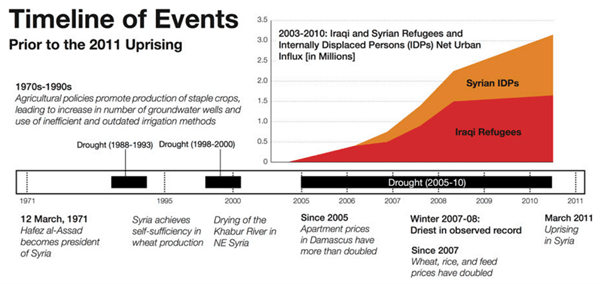
However, it is dangerous to point at climate change as the root cause of all the region’s ills. This proposition risks prompting deceptively simple conflict-resolution measures limiting the policymakers to set the stage for real change. To make things worse than they already were, the government and other non-state actors deliberately destroyed water resources and vital infrastructure as a wartime strategy. At one point about 35% of Syrian sewage treatment plants no longer functioned. The ISIS’ capture of Tabqa dam in 2013 led to them releasing 11 million cubic metres of water to the surrounding farmland, forcing the local populations into submission.
2.2. The Middle East
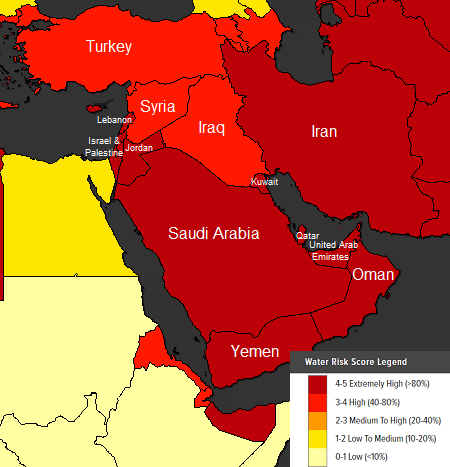
During the summer of 2021, the Middle Eastern countries became tinderboxes. As extreme temperatures and severe droughts ravaged the region, forests burned, and cities became islands of unbearable heat. Kuwait recorded a temperature of 53.2 degrees Celsius in June, while Oman, the United Arab Emirates, and Saudi Arabia all recorded temperatures above 50 degrees Celsius. A month later, temperatures in Iraq peaked at 51.5 degrees, while Iran recorded close to 51 degrees. The Middle East and North Africa have been experiencing almost continuous drought since 1998, which is the most severe dry spell in 900 years according to NASA. According to the World Bank, extreme climatic conditions will become routine and the region could face four months of scorching sun every year. Germany’s Max Planck Institute, while supporting these claims adds that many cities in the Middle East may become uninhabitable before the end of the century. And the region, ravaged by war and mired in sectarianism, may be singularly ill-prepared to face the challenges that threaten its collective existence. By as soon as 2025, 80-90 million people are predicted to be exposed to severe water stress.
Furthermore, climate change in the Middle East is part of a wider transformation of socio-ecological assemblages that are negatively affecting the capacity of countries to adapt to environmental shocks and stresses. A necessary displacement here of the geographical imaginary of the Middle East is offered by the Intergovernmental Science-Policy Platform on Biodiversity and Ecosystem Services (IPBES) which, in its relevant regional assessment, records for “western Asia” high biodiversity losses and a major deterioration in ecosystem services since 1970. This ecological decline is attributed principally to land-use change (notably urbanization), direct exploitation of natural resources, and pollution.
In countries like Iran, Iraq, Lebanon and Yemen, air conditioners have become a luxury for even the relatively wealthy. These countries are encumbered by war, Western sanctions, or a self-serving ruling elite and have witnessed large protests against a lack of basic services as temperatures rise and droughts parch the fields. The scenes of social unrest have provided a glimpse into the future of the region that is most acutely feeling the effects of climate change.
Last year’s record-breaking heat in Iraq drove people to the streets. They blocked roads, burned tyres, and surrounded power plants that had to be secured by armed forces in a fit of rage. Ironically, oil-rich Basra in southern Iraq has experienced some of the longest power outages and has been the site of protests in which at least three Iraqis have been killed. Political instability, according to experts, is the primary cause of Iraq’s electricity crisis. The Lebanese are already dealing with a slew of crises and are frustrated by the political elite’s inaction. As the country’s fuel supply ran out, scenes of chaos erupted across the country. Some people looted fuel tankers, others ransacked power plants, and yet more carried firearms to fuel stations to get ahead of hundreds in line. Power outages lasting three hours had been routine in Lebanon since the civil war ended in 1990. However, as the economy collapsed in 2019, blackouts became longer and generators became more noticeable, roaring across the country. On August 12, the Central Bank removed fuel subsidies, causing generators to run dry. Lights went out, and even those in affluent areas accustomed to air conditioning had to deal with the sweltering heat.
Scene 3: The Water Woes
The MENA region is home to 6% of the world’s population, but only 1% of the world’s freshwater resources, with 17 countries in the region falling below the water poverty line set by the United Nations. With rainfall projected to decline 20 to 40% in a 2°C hotter world, and up to 60% in a 4°C hotter world, the region’s ability to provide water to its people and economies will be severely tested. By 2100, “wet-bulb temperatures”—a measure of humidity and heat—could rise so high in the Gulf as to make it all but uninhabitable, according to a study in Nature. In the places where the populations may still manage to live somehow, the reduction in the availability of water will stoke tensions over diminishing resources.
The UN has warned that increasing populations and food demands, combined with even scarcer water and land resources, could lead to a doubling of food prices as local crops will become depleted and farmers’ livelihoods blighted – triggering civil unrest in some developing countries. The prolonged dry spell in Syria killed 85 percent of livestock in the east and caused widespread crop failure, pushing 800,000 people into food insecurity and sparking mass migration from rural to urban areas, with farmers moving into cities such as Damascus and Aleppo. The country’s total urban population increased by 50% between 2002 and 2010, preparing the populace for concentrated, large-scale political unrest.
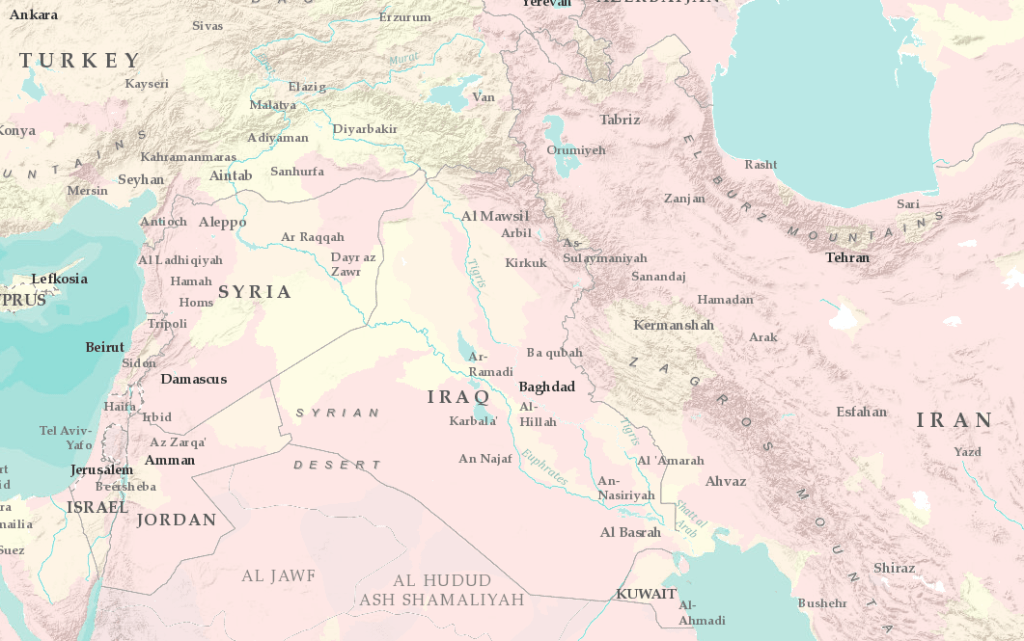
The drought-migration-Syrian war thesis is largely discredited, both from evidence on migration and from comparative research observing no parallel effects from the same drought on adjoining water-stressed basins. It is acknowledged more generally that water deficits can exacerbate social and political tensions, and that actors securitize water scarcity in the face of increasing competition, yet climate change is less a source of pressure on water and food availability than demographic change (population growth and large-scale migration) and governance systems incompatible with social and ecological sustainability. Institutional failings accentuating water scarcity are apparent at multiple scales— from the domestic (e.g., social conflicts intensified by the skewed development of water resources in Yemen) to the transboundary (e.g., the vulnerable water war hotspot of the Euphrates and Tigris river basin which flows through Turkey, Syria and Iraq. All three countries want to use as much water as possible for irrigation, and all three want to use the river flow for generating electricity.)
In Jordan, one of the world’s most resource-poor states, many houses only get up to 24 hours of water a week. Protests broke out in the summer of 2018, the largest in recent years, over severe water shortages and food which led to the resignation of Prime Minister Hani al-Mulki. Across the region, there is also widespread over-extraction of groundwater unchecked by governments. Although climate change and variability are not drivers of conflict, these various governance failings leave poorer Middle East countries vulnerable to climate-related impacts on water and land resources. At the moment, the Nile Basin’s unpredictable dry and wet weather, caused in part by climate change, is contributing to intermittent floods and water shortages. When Ethiopia began construction on a massive dam on the Nile, potentially limiting flow, Egypt, which depends on the river for nearly all of its water, threatened war. The Nile Delta is among the most threatened areas, with sea-level rise potentially displacing millions.
Scene 4: Water for Everyone
Although the United States and European countries seem to be preparing to pivot away from the Middle East, they and international organisations like the UN must work harder to foster international norms that protect the natural resources and infrastructure even in the middle of the conflict. Washington however has a limited appetite for confronting oil providing partners like Saudi Arabia on human rights violations. But pressurising the American partners in the Middle East (like Riyadh), to adopt common standards on this issue will help protect the civilians across the globe.
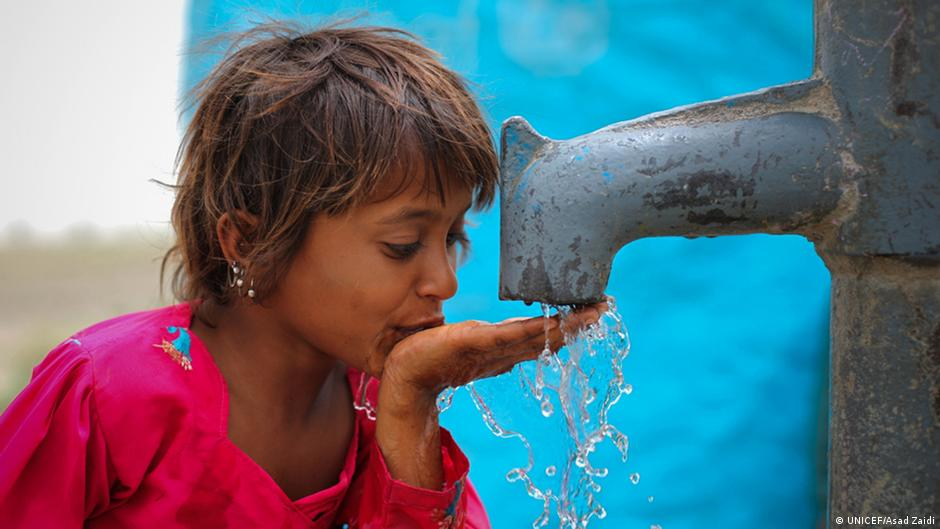
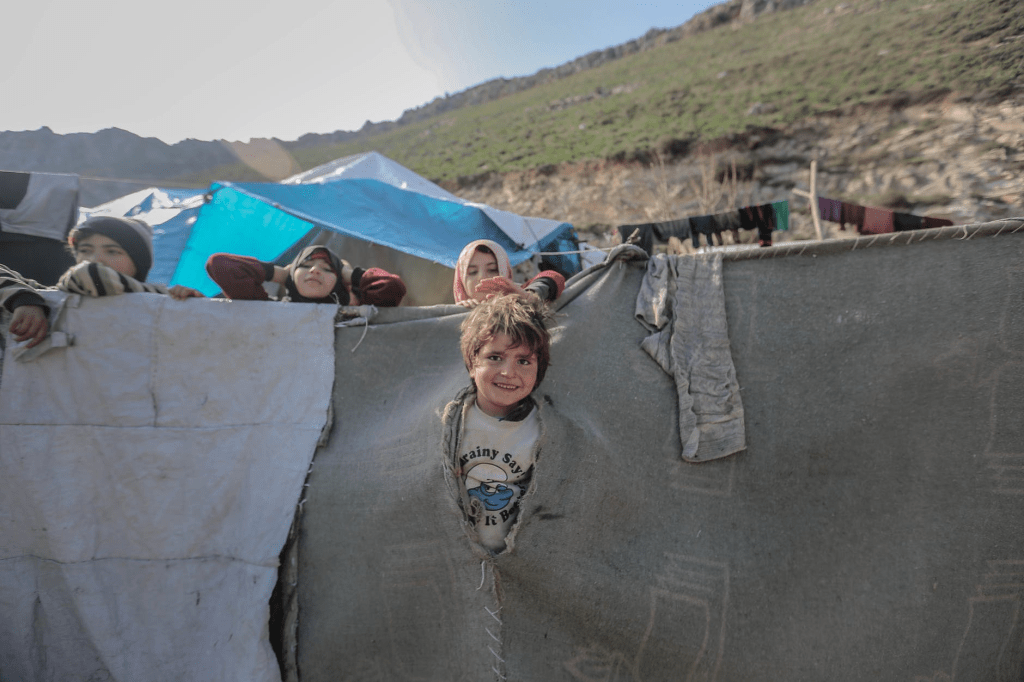
After all, there are no long-term winners when infrastructure is destroyed. Alongside the devastating impacts on civilians, situations like these also attract complications that foreign actors would choose to avoid. Like in Syria and Yemen, the destruction of infrastructure only fueled the formation of lucrative war economies, with both pro and anti-regime elites carrying out smuggling and extortion rackets in exchange for food, water and fuel. When civilians can no longer look to their state to provide necessities like potable water, room for non-state actors like ISIS to make inroads is created. This dynamic doesn’t work to benefit even the most cynical of international actors operating in the region. Therefore, in the end, the most vulnerable of the population, the refugees end up paying the ultimate price.
So just like the MENA region have indicated, if there is an international consensus against the weaponisation of water, it exists in principle but not in practice. It remains unclear how and when will these conflicts end. But when they do, accountability for the environmental damage must be part of any post-conflict transition.
Conclusion: Beyond the Battlefield
Of course, the environmental crisis in the MENA region extends beyond war zones. Massive droughts and frequent sandstorms are forcing hundreds of thousands of the rural poor to leave their homes. This is one reason why the Middle East currently hosts 45% of the total refugees currently registered with the UN. While the place is not as food insecure as sub-Saharan Africa, approximately 50 million people there face chronic undernourishment. This must urge the policymakers to push forward deals that focus on the vulnerable and displaced. One critical piece of information to aid policymaking would be the data on determining how climate change has contributed to displacing populations. One thing we know for sure is that climate change plays a vital role in these already vulnerable regions. Another factor that drives mass migrations in the Middle East is the region’s intense economic inequality, which climate change threatens to worsen.
On the other hand, we see oil-rich, non-agricultural economies such as Qatar, Saudi Arabia and the United Arab Emirates that have financial and technological resources that will aid them to lower their emissions and protect their populations from the effects of climate change and adapt to a future where the demand for fossil fuels would be much lower than what it is today. Far from losing out in the green economy of the future, those countries are poised to reap significant gains as the demand for oil is destined to grow before it starts to decline eventually. In contrast, countries like Yemen, Syria and Iraq will not be able to adapt to climate change on their own. Resource-poor Arab states, often dependent on foreign aid and other forms of external support, are more exposed to climate-related stresses from disruptions to rural livelihoods and urban food systems. Yet environmental pressures are never unmediated by political-economic contexts: insofar as vulnerable groups associate degraded socio-ecological conditions of living with their political disenfranchisement, the legitimacy of these states is open to challenge.
In the end, nobody should downplay the importance of climate change in today’s Middle East or the region’s future. We should understand that the worst outcomes related to environmental stress and scarcity in the region are caused, not by long term shifts in the climate but short-term actions and choices made by the people in power and institutions which are far easier to influence. Grasping that fundamental truth is the first step to both protecting the most vulnerable populations in the region and helping governments to transition to more sustainable practices. The economic load of these tasks may be high but gains to human security and prosperity would be far greater.


 HAEVYRE
Leave a comment