
As of early 2023, the Indian population is all set to become the largest in the world, clocking a whopping 1.41 billion. India has enjoyed steady economic growth in recent years and has been able to achieve self-sufficiency in grain production. Despite this, high levels of malnutrition, poverty and food insecurity continue to haunt the Indian population. Around 44% of the 1.41 billion are landowners (mostly small landowners) who rely on agriculture for a living. Agriculture, therefore, not only becomes central to the food and nutritional security of the country but also to poverty alleviation and national prosperity. The Indian food ingredients market, currently estimated at $1584.08 million, is projected to grow at a CAGR of 6.7% by 2029. The question has to be asked, can the Indian agriculture sector keep up with the rising food demand of the country?
Scene 1: Agriculture and Civilizations
Before the advent of agriculture, people spent the majority of their time looking for food, hunting wild animals and gathering wild plants. Around 11,500 years ago, people gradually learned how to grow cereal and root crops and settled into a farming-based way of life. Over centuries, the growth of agriculture has contributed to the rise of civilizations. By 2000 years ago, most of the Earth’s population found itself dependent on population. Scientists attribute this huge shift to changing climate. The planet’s warming and increased moisture availability enabled a transition from a tribal nomadic structure to a larger community life.
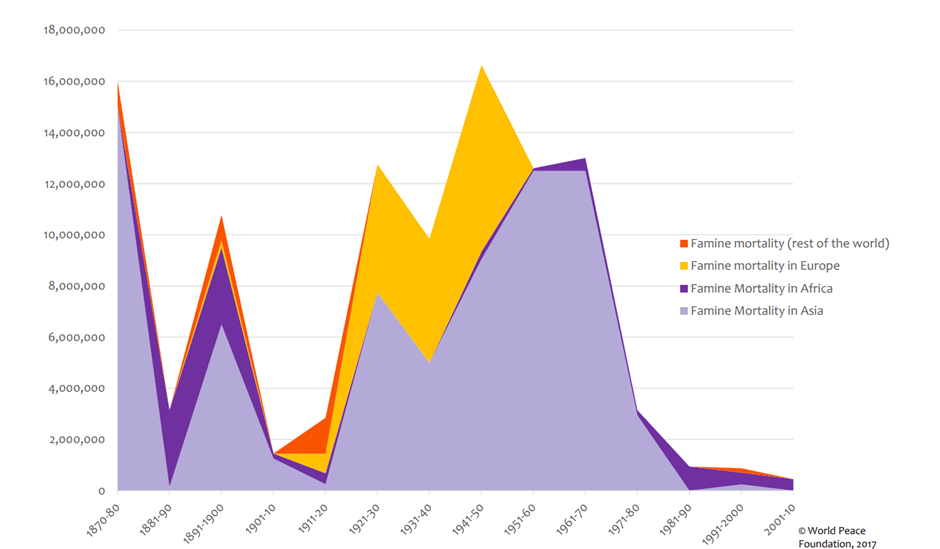
Agriculture may have enabled civilizations, but it has never been a safeguard against their collapse. Increases in agricultural productivity have historically competed with population growth, resource degradation, droughts, changing climates, and other forces that periodically crippled food supplies, with the poor bearing the brunt of famine. This was until the population explosion beginning during the mid-1800s and the 20th century, which lead to a global increase in population from 1.65 billion in 1900 to the current level of over 7.8 billion.

The late 19th and early 20th centuries came about as pretty turbulent in the history of the world. With raging wars, rapidly expanding populations and recurring famines, the world desperately needed a change in the methods of agriculture. To the rescue came a few major technological advancements due to the world wars, in the early 20th century. The Haber-Bosch process led to the formation of nitrogenous fertilizers formed by converting atmospheric nitrogen to ammonia. Soon came more advanced methods of agricultural mechanisation and systematic plant breeding which were facilitated by chemicals used for crop enhancement and protection. These developments in turn contributed towards the advent of the Green Revolution as we know it today.
Source: World Peace Foundation
By the 60s ended, great minds like William Gaud, Norman Borlaug and M.S. Swaminathan had successfully begun their pursuit of revolutionizing the way the world practised agriculture. Had it not been for them, less than half the world’s population could’ve been sustained with conventional farming practices with the same land area under cultivation. Since the impacts of agriculture transcend different levels of society, it was because of the Green Revolution that the world was brought out of constant famines, food insecurity and political instability, in turn saving millions from hunger-related deaths.
Scene 2: Food Insecurity
Food security is a concept that encapsulates the availability, accessibility and utilization of nutritious food to meet the dietary needs of all people at all times, without compromising their well-being. It encompasses three main components, availability of adequate food supply at the national, regional and household levels, accessibility to food through legal and affordable means and utilization of enough nutritious food to meet dietary needs.
Food security is a major concern for both India and the world. In India, despite being a major producer of food crops, millions of people still suffer from malnutrition and hunger. The main issues contributing to food insecurity in India include poverty, lack of access to resources such as land and water, and inefficient agricultural practices. Climate change is also expected to have a significant impact on food production in India in the coming years, further exacerbating the challenges to food security.
The world’s population is projected to reach 9.7 billion by 2050, and feeding this growing population will be a major challenge. Climate change, water scarcity, and soil degradation are some of the major factors that threaten global food security. In addition, the unequal distribution of resources and wealth, conflicts, displacement, and economic downturns contribute to the food insecurity of many people around the world.

In recent years, India has made great strides in increasing its food production and building up a sufficient supply of food grains, the effects of which were very evident during the first lockdown due to the pandemic. The Indian government was able to comfortably provide food to millions of people from their reserves. Agriculture, including livestock, remains the primary means of livelihood for over 70% of rural households in the country. India’s food grain production has grown dramatically, from 50 million tonnes in 1950-51 to nearly 300 million tonnes in 2019-20, which has enabled India to become a net food exporter and one of the top agricultural product exporters in the world. The agriculture and allied sectors’ contribution to the overall Gross Value Added to the economy has also increased, reaching 20.2% in 2020-21 and 18.8% in 2021-22.
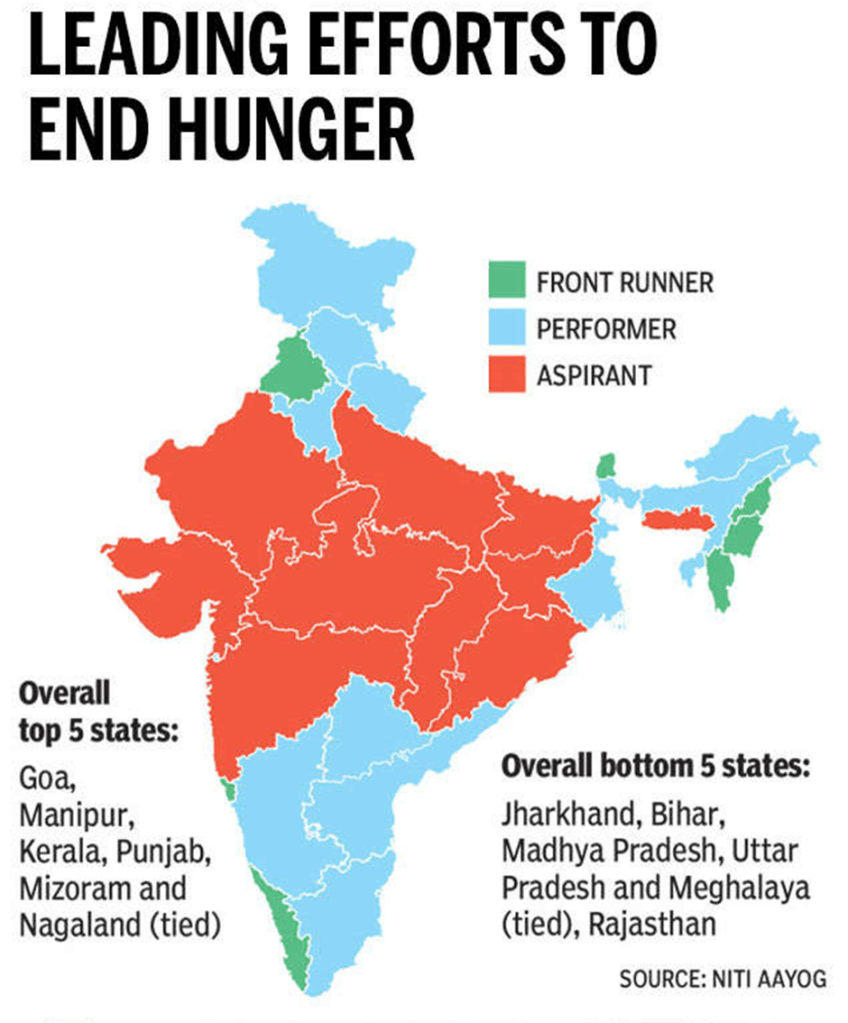
As a result of these efforts, India has transformed from a food-deficit nation to a self-sufficient food-producing country over the last 30 years. This transformation can be attributed to the National Food Security Act of 2013, which has helped to provide subsidized monthly household rations (such as rice, wheat, or millets) to over 813 million people through the Public Distribution system. This has brought us closer to achieving the United Nations SDG 2 of ‘Zero Hunger’, but there is a long way to go still. The country still has a large number of malnourished children and adults, and the COVID-19 pandemic has further exacerbated the situation by leading to job and income losses, making it difficult for many people to access food.
Source: TOI
In the future, there are several key areas that India needs to focus on to improve food security. One of the main challenges will be to increase food production to meet the needs of a rapidly growing population while facing the impact of climate change on agriculture. This will require investing in sustainable agricultural practices and research and development of new technologies. Additionally, the government will need to address the issue of poverty and ensure access to education, healthcare, and basic human needs for all people, which is crucial for achieving food security.
Scene 3: Input Economics for the Farmer
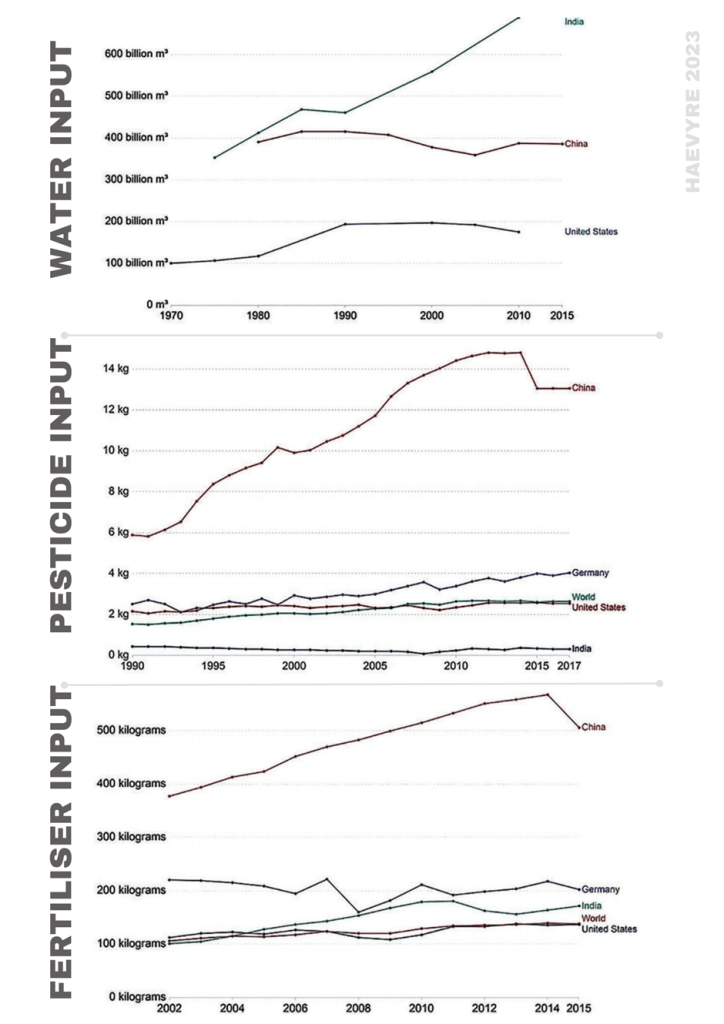
The major input costs for a farmer include seeds, fertilizers, agrochemicals such as pesticides, herbicides, and weedicides, irrigation water, electricity and fuel, which are required for successful agricultural production. Most of these are either subsidised by the government or are available naturally to the farmer, or both. India receives a substantial amount of rainfall annually, around 4000 billion cubic meters, which is considered large by any standards. However, the majority of this rainfall is concentrated in eastern India. Additionally, a significant portion of the rainfall occurs in a short period, usually within 100 hours of heavy rain. This highlights the importance of water storage and irrigation for agriculture in India as a means to make the most of the rain that falls. However, the average Indian farmer uses the highest amount of water input compared to its global counterparts. Both China and the US have either flattened or even reduced their water requirement for agriculture. The demand for water for agriculture in India has steadily increased. The biggest threat to sustainability and long-term prosperity in India emanates from the overexploitation of groundwater resources.
Source: Our World in Data
The Indian farmer’s use of fertilizers is not excessive and very close to the global average. However, the use is disproportionate. Areas where crops are intensively cultivated and irrigated, such as those under wheat-rice and rice-rice cropping cycles, consume significantly more fertilizer than areas with dryland and high rainfall. Additionally, there is an imbalance in the use of the three major components of fertilizer: Nitrogen, Phosphorus, and Potassium, with Nitrogen being used far more than Potassium. This can be attributed to the fact that the government gives fertilizer subsidies of up to 70% of the market price for nitrogen-based fertilizers but only 35% of the market price for phosphorus, and potash is all imported and hence, expensive. This leads to an imbalance in the usage of all three macro components.
India is one of the lowest users of pesticides but faces substantial cropping losses due to pests. In developed countries, herbicides make up nearly half of all pesticide usage. The economic losses caused due to weeds are staggeringly high, around Rs 80,000 crore annually. For these reasons, the Indian farmer will either have to increase the use of chemical pesticides or shift to gene editing-based solutions in order to achieve greater yield and profits.
Scene 4: Biotechnology and Indian Agriculture
Genetically engineered crops have been a topic of significant interest and debate in the agricultural community. On one hand, they hold the potential to increase yields, improve resistance to pests and diseases, and provide better quality food. On the other hand, there are concerns about their environmental impact, potential harm to non-target species, and impact on human health. Despite these concerns, genetically engineered crops have had a positive impact in India and played a crucial role in driving the country towards a more food-secure future. Climate change poses many potential risks to crops which are sensitive to abiotic stress. Genetic engineering solutions can help produce pest and weedicide resistance in crops while making them less vulnerable to abiotic stress, thereby decreasing yield losses and improving farmer incomes.
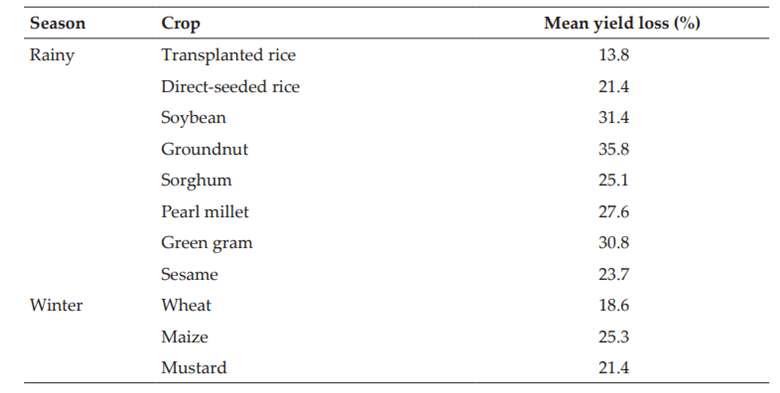
Source: Gharde et al. 2018
GE crops have been instrumental in increasing crop yields and improving the efficiency of farming practices. For instance, the widespread adoption of Bt cotton, which has been genetically modified to resist bollworm pests, has led to a reduction in pesticide use, higher yields, and improved farmer incomes. The decrease in pesticide use promises improvement in farmer health by decreasing exposure to harsh chemicals. Bt cotton has also helped India in becoming the largest producer and exporter of cotton from an importer. Similarly, genetically engineered brinjal (eggplant) is expected to bring about a reduction in the use of insecticides, higher yields, and better quality fruit. Genetically engineered rice (Golden Rice) has been developed to contain higher levels of Vitamin A, a nutrient that is often lacking in the diets of people in developing countries. The enhanced nutritional value of this crop can help alleviate vitamin A deficiency, which is a leading cause of blindness and death in children in developing countries.
In addition to these direct benefits, the development and implementation of GE crops in India have also had indirect positive impacts on the country’s agricultural sector. The increased use of biotechnology in agriculture has created new jobs and provided a boost to the country’s economy. It has also led to the development of new technologies and methodologies that can be applied to other crops and industries, driving more innovation and progress in the field.
Scene 5: Market Failure: A Challenge to GM crops
One of the biggest challenges faced by the release of GM crops for commercial use in India is market failure. For some farmers, using GM crops over their conventional counterparts poses a huge dilemma. Although the net yield for the same crop might be higher, the input costs increase as well. The net profit in some cases, therefore, can be greater if conventional crops are used. This is one example of market failure.
Market failure is a situation where a free market is not able to efficiently allocate goods and services, resulting in a net loss of economic value. It can be caused by a variety of factors such as lack of information, market control, regulatory failure, and externalities. These factors can prevent the market from operating in a way that maximizes economic value and can lead to inefficiencies and suboptimal outcomes. An imperfect market caused by policy failure leads to incorrect pricing due to market control, especially in the case of GM crops. These crops are patented by private agricultural organizations and can only be marketed and used by paying royalties to the parent company. In the absence of competition, these companies have the power to price things incorrectly and may use various strategies like inducing the GM crops with ‘terminator genes’ so that farmers can’t reuse the progeny seeds of the crop next year, which further reinforces their control over the market and pricing. This can lead to negative consequences for both farmers and consumers in the long run.
One example of a market monopoly is one that is heavily debated, Monsanto’s link with farmer suicides. Human rights groups associated with agricultural practices claim that farmer suicides in India were caused due to the high cost of GM seeds. Monsanto’s GM seeds are patented and can only be obtained by paying royalties to the company. Many small-scale farmers have found it difficult to afford these seeds and have taken out loans to purchase them, but when the crops fail or yields are lower than expected, due to factors such as pests and weather, farmers are unable to repay their loans and may turn to suicide as a result. Additionally, GM seeds are often used in conjunction with specific pesticides and herbicides which can be costly and toxic, and exposure to these chemicals has been linked to health problems for farmers and their families, and in some cases, suicides. It’s important to note that farmer suicides in India are a complex issue with multiple factors at play such as poverty, debt, lack of access to education and healthcare, and social and cultural factors.
To address such issues of monopoly and market control, the role of competition and innovation becomes very important. The patent regime is a system that allows the innovator to protect the innovation while declaring it. This protection allows innovators to recoup the costs of research and development and encourages innovation. However, it also promotes innovation in the long run, as it allows other stakeholders to build upon the already available information, leading to more innovation and competition in the market. This competition forces the competing players to offer the best price to the consumer, resulting in a more efficient allocation of resources and more options for the consumer. This ultimately leads to more innovation and better prices for the consumer.
“Asymmetric information” is a term that refers to a situation where one party in a transaction holds more information than the other. In the context of GM crops and Monsanto, farmers have been reported to have been misled by the company’s advertisements on the efficiency of BT cotton. For example, an official from a Maharastra-based farmers’ union has claimed that Monsanto’s advertisements are misleading and that farmers should shift to organic cotton since there was no global market for BT cotton. Additionally, other reports indicate that BT cotton seeds are costly and do not reduce pesticide use as promised. These claims demonstrate information asymmetry between privately-owned organizations such as Monsanto and the farmers. Asymmetric information can be combated, however, by equipping the farmers with true information and ensuring transparency.
Scene 6: Regulatory Failure and Policy Implications
The commercial release of GM crops in India is still a heavily debated topic among the government and scientific circles. To address the release of the same, the Substantial Equivalence (SE) approach and the Precautionary Principle (PP) came forward as frameworks used to evaluate the safety of genetically modified crops.
The SE approach compares the nutritional and compositional characteristics of a GM crop to those of its conventional counterpart. The idea behind this approach is that if a GM crop is found to be substantially equivalent to its conventional counterpart, it is considered safe for human consumption. This approach is based on the concept of “substantial equivalence” which assumes that a GM crop that is substantially equivalent to its traditional counterpart is safe to consume. The Precautionary Principle (PP), on the other hand, is a more cautious approach that is used to evaluate the safety of GM crops. This principle states that if an action or policy has the potential to cause harm to the public or the environment, in the absence of scientific consensus, the burden of proof that it is not harmful falls on those taking the action. It is a principle that encourages the use of caution and taking preventative measures in the face of uncertainty. Both of these approaches have been used in the evaluation of GM crops. While the SE approach is widely accepted and used by regulatory agencies, the PP approach has been criticized for being too cautious and not taking into account the potential benefits of GM crops.
There is no GM crop except BT Cotton which has been cleared for commercial release. Although 20 different GM crops are at different stages of trials, none have found their way to the market yet. The closest contenders have been the BT Eggplant (Brinjal) and GM Mustard (DMH – 11). Both these plants started their journey for trials and approvals in the early 2000s. In the case of the BT Brinjal, which was the first food crop that was evaluated for commercial release in India, it couldn’t find its way into the Indian market. In 2010, a moratorium was imposed on Bt-Brinjal field trials by the Indian government based on public consultations. This decision was made due to a lack of consensus among scientists and opposition from brinjal-growing states. The government also made it mandatory for field trials to have No Objection Certificates from states. However, in 2013, new crop trials have been effectively on hold since late 2012, after a Supreme Court-appointed expert panel recommended suspension for 10 years until regulatory and monitoring systems could be strengthened. Though the Supreme Court panel suggested a moratorium on GM trials, there was no official verdict from the Supreme Court on this issue.
The GM Mustard doesn’t have a different story either. A case contesting the commercial release of GM Mustard has been filed in the Supreme Court and is still going on and the decision is awaited.

The externalities surrounding genetically engineered crop agriculture include negative consumer behaviour due to the associated taboo with GM crops. Similar to the concerns about the “green revolution” technologies, there are concerns about the use of GE technologies in agriculture among consumers, such as market concentration and corporate control, impacts on income inequality, impacts on biodiversity, and biosafety. Due to these concerns, GE crops and foods have become the subject of special surveillance and regulation virtually everywhere in the world, in comparison with other new cultivars entering the market. This has led to a number of concerns being raised by consumers, farmers, environmentalists and other stakeholders, which need to be addressed to ensure the sustainable use of GE crops.
Conclusion
Agriculture around the world must meet the challenge of feeding a growing population while minimising environmental impact. Making farming profitable for small landholders is an additional challenge for India. Biotechnology and innovation have played a pivotal role in driving Indian agriculture forward in order to achieve food security. The development of GM crops, modern breeding techniques, and drought-tolerant crops have the potential to increase crop yields, reduce the use of pesticides, and improve resistance to pests and diseases. However, it’s important to note that biotechnology is not a silver bullet, and the success of these technologies relies on the proper implementation of policies and regulations, as well as the active participation of farmers.
A comprehensive, data-driven approach must be implemented in order to advance the biotechnology sector and promote the adoption of genetically engineered crops in India. The key to this success lies in the preparedness of society to embrace these innovative technologies, based on a thorough examination of the best available scientific evidence. This requires a systematic and impartial assessment of the benefits and risks of these crops, as well as a careful evaluation of the potential social, economic, and environmental impacts. To ensure the most optimal outcomes, it is essential to involve a diverse range of stakeholders in the decision-making process, including farmers, researchers, policymakers, and members of the general public. By following a rigorous, evidence-based approach, India can harness the full potential of biotechnology to achieve its food security goals and drive economic growth.


 HAEVYRE
Leave a reply to ayushigupta10101 Cancel reply